By 2026, the honeymoon phase of "experimental AI" will be long over. For CTOs and Lead Data Engineers, the priority has shifted from simply getting access to H100s and B200s to achieving sustainable unit economics on inference and training.
If you are currently running large-scale LLMs or complex computer vision models on the Big Three public clouds (AWS, GCP, Azure), you are likely paying a "convenience tax" that is eating 40% to 70% of your infrastructure budget. As we look toward 2026, the gap between public cloud pricing and bare metal reality is widening into a canyon.
In this post, we’ll break down why public cloud GPUs have become so expensive, the technical debt of virtualization, and how BitRefinery helps teams reclaim their margins through bare metal hosting.
The Anatomy of the "Cloud Tax" in the AI Era
Public clouds were built on the premise of elasticity—the ability to scale up and down instantly. However, modern AI workloads are rarely elastic in that sense. Training runs can last weeks, and inference clusters for production apps often require 24/7 uptime.
When you use a public cloud GPU instance, you aren't just paying for the silicon. You are paying for:
- The Hypervisor Overhead: Virtualization introduces a performance penalty. In high-performance computing (HPC), even a 5% latency hit in data transfer between the CPU and GPU can translate into thousands of dollars in wasted compute time over a month.
- Egress and Interconnect Fees: Moving massive datasets between storage buckets and GPU clusters is where the hidden costs live. Public clouds often charge exorbitant rates for the very bandwidth required to make AI functional.
- The Margin Stack: You are paying for the cloud provider’s massive marketing budget, their proprietary management software, and their shareholder dividends.
The 2026 Reality: Scarcity and Reservation Lock-in
By 2026, we expect the market to be bifurcated. On one side, you have "On-Demand" pricing, which is increasingly volatile and subject to preemptive interruptions. On the other, you have 1-year or 3-year Reserved Instances (RIs).
While RIs offer a discount, they lock you into a specific architecture. If a more efficient Blackwell-series or next-gen GPU becomes available mid-contract, you are stuck with aging hardware at yesterday's prices. This lack of flexibility, ironically, defeats the original purpose of the cloud.
The Bare Metal Alternative: Why Direct Access Wins
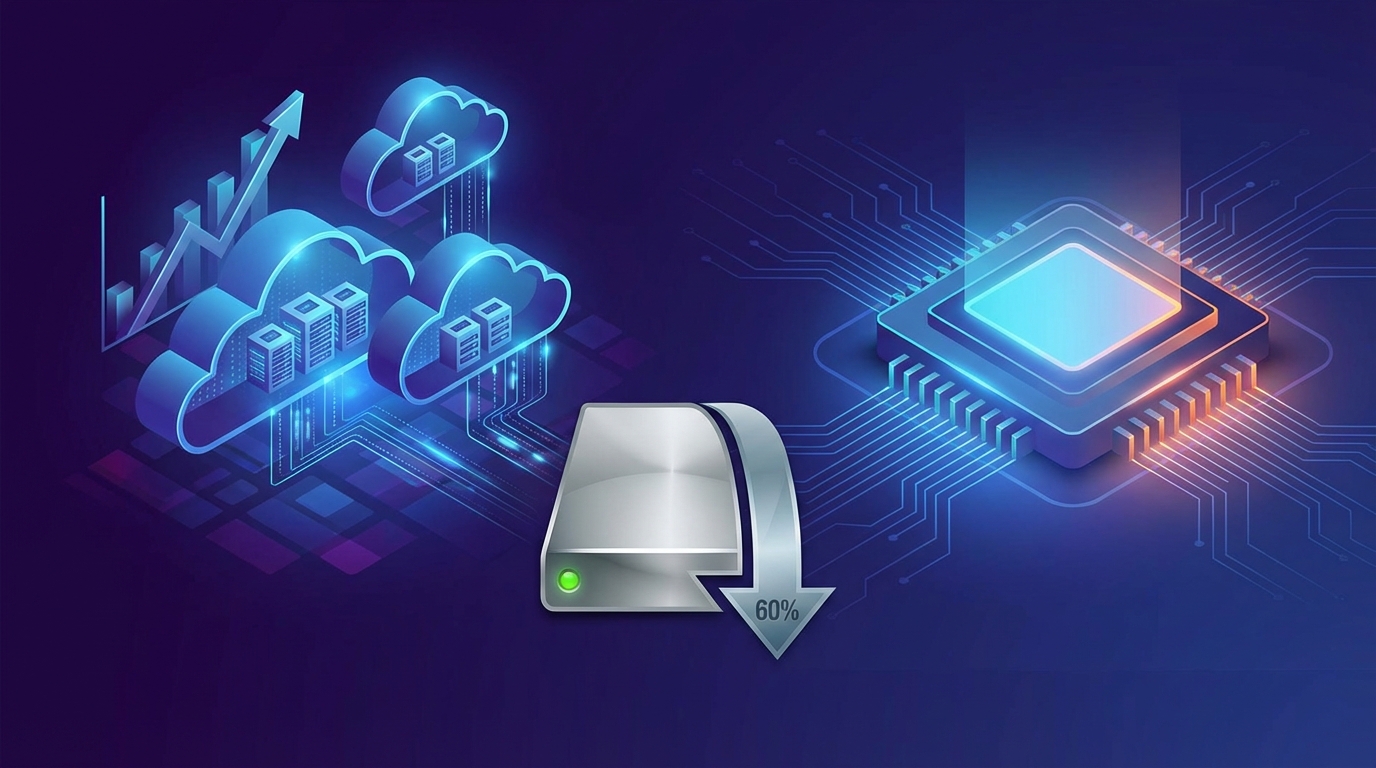
Bare metal hosting—specifically GPU-optimized bare metal—removes the layers between your code and the hardware. At BitRefinery, we see engineering teams achieving a 60% reduction in TCO (Total Cost of Ownership) by moving stable workloads out of the public cloud.
Here is how those savings materialize:
1. No Hypervisor, No Tax
On bare metal, your OS has direct access to the PCIe bus and the NVLink interconnects. This results in higher throughput and lower latency. For distributed training (using frameworks like DeepSpeed or Megatron-LM), the performance gains of bare metal mean your jobs finish faster. If a job finishes 15% faster, that’s 15% less compute you have to pay for.
2. Predictable, All-In Pricing
Unlike the labyrinthine billing statements of AWS, bare metal hosting is typically flat-rate. You rent the server, the GPUs, and the port. There are no surprise "API request fees" or "inter-zone data transfer" charges that spike when you re-train a model.
3. Custom Interconnects and Storage
Public clouds often force you into a specific storage tier to get the IOPS required for AI. With BitRefinery’s bare metal, we can architect high-speed NVMe arrays and 100G/400G networking that sits directly next to your GPUs. This eliminates the I/O bottlenecks that often leave expensive GPUs sitting idle (the "starvation" problem).
Case Study: From $85k/mo to $32k/mo
Consider a mid-sized startup running a cluster of 32 NVIDIA H100s for continuous fine-tuning and batch inference.
- Public Cloud (On-Demand/Pay-as-go): Approximately $85,000 - $95,000 per month once you factor in premium storage and egress.
- BitRefinery Bare Metal: Approximately $32,000 - $38,000 per month.
By moving to bare metal, the company doesn't just save money; they gain the ability to double their compute capacity for the same original budget, significantly accelerating their R&D roadmap.
Is Bare Metal Right for You?
Bare metal isn't for every single use case. If you need to spin up 1,000 GPUs for exactly two hours and then never use them again, the public cloud’s elasticity is worth the premium.
However, you are a prime candidate for bare metal if:
- Your GPU utilization is consistently above 40%.
- You are running production inference services with steady traffic.
- You are frustrated by "Instance Unavailable" errors in popular cloud regions.
- Your data egress or storage costs are becoming a significant percentage of your bill.
Strategy for 2026: The Hybrid Approach
We recommend a "Core and Burst" strategy. Keep your experimental, highly elastic workloads on the public cloud. But for your core model training and production inference, migrate to bare metal.
At BitRefinery, we don't just provide the hardware; we provide the expertise to bridge these environments. Whether it's optimizing your ClickHouse clusters for feature storage or ensuring your Trino queries can access data across environments without latency, we focus on the infrastructure so your data scientists can focus on the models.
Conclusion
As we approach 2026, the competitive advantage in AI will go to companies that optimize their "Cost per Token." You cannot win that race while paying a 60% markup to a legacy cloud provider. It’s time to look under the hood, strip away the virtualization, and get back to the metal.
Ready to see the math for your specific workload? Contact BitRefinery today for a custom GPU infrastructure audit and see exactly how much you can save by making the switch.