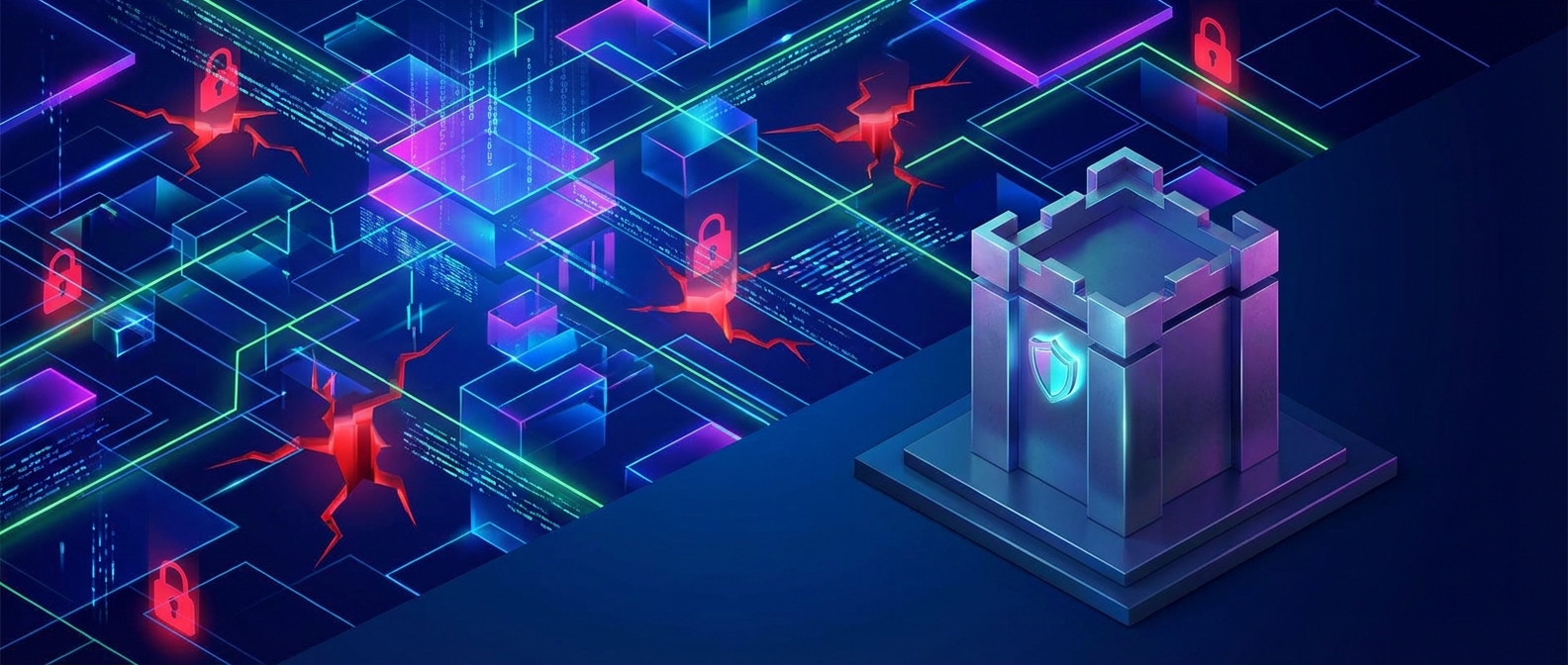
In the world of enterprise infrastructure, the phrase "the cloud is just someone else's computer" has become a cliché. But for CTOs and DevOps engineers responsible for sensitive data, the reality is more unsettling: in a public cloud, that computer is being shared by dozens, or even hundreds, of strangers simultaneously.
While hyperscale providers like AWS, Azure, and GCP have built incredible ecosystems, the underlying architecture of multi-tenancy introduces a surface area of risk that many organizations are no longer willing to accept. From "noisy neighbor" performance degradation to catastrophic side-channel vulnerabilities, the shared-resource model is showing its age.
At Bit Refinery, we believe that for mission-critical workloads, the move back to private bare metal isn't just about performance—it’s a fundamental security requirement. Here is why multi-tenancy is a security nightmare and how dedicated hardware provides the antidote.
The Illusion of Isolation: The Hypervisor Trap
The fundamental promise of the public cloud is logical isolation. The hypervisor—the software layer that manages virtual machines (VMs)—is supposed to act as an impenetrable wall between Tenant A and Tenant B.
However, history has shown that software is rarely impenetrable. Over the last decade, we have seen a rise in Side-Channel Attacks (like Spectre, Meltdown, and L1 Terminal Fault). These vulnerabilities allow a malicious actor on one VM to peek into the memory or cache of a neighbor VM by exploiting the way modern CPUs execute instructions.
When you share a physical CPU with a stranger, you are relying entirely on the hypervisor to prevent data leakage. In a dedicated bare-metal environment, this entire class of vulnerability is mitigated. There is no "neighbor" to exploit the CPU cache because you own the entire socket.
The "Noisy Neighbor" is More Than a Performance Issue
Most engineers think of the "noisy neighbor" effect as a performance bottleneck—one tenant's massive batch job slowing down your API response times. But from a security and availability standpoint, this is a form of unintentional Denial of Service (DoS).
In a multi-tenant environment, resource contention for disk I/O, memory bandwidth, and network throughput is a constant battle. If another tenant on your physical host is compromised and becomes part of a botnet, their outbound traffic surge can saturate the shared physical NICs, effectively knocking your application offline.
By moving to a Bit Refinery Silver, Gold, or Platinum tier server, you eliminate contention. You aren't just getting the 80 cores and 1 TB of RAM you paid for; you’re getting the dedicated physical paths to the storage and the network. Your availability is no longer tethered to the behavior of a stranger.
Data Sovereignty and the "Blast Radius"
In a multi-tenant cloud, your data is physically co-mingled with others on massive storage arrays. While encryption-at-rest is standard, the management of those keys and the underlying physical disks remains in the hands of the provider. If a provider's administrative layer is compromised, the "blast radius" encompasses every tenant on that infrastructure.
Bare metal shrinks the blast radius to zero. When you deploy on dedicated hardware, you have physical control over the storage controllers. At Bit Refinery, we utilize RAID6 SSD configurations (up to 150 TB on our Platinum nodes) that are physically mapped to your server alone. There is no shared storage fabric where a configuration error by the provider could accidentally expose your volumes to another account.
The Compliance Headache
For industries like Finance, Healthcare, and Government, compliance (SOC 2, HIPAA, PCI-DSS) is a grueling process. In a public cloud, proving "physical isolation" is impossible. You are forced to rely on the provider's third-party audit reports and hope their software-defined networking (SDN) is configured correctly.
On bare metal, compliance becomes a "checkbox" activity. You can point to a specific serial number in a specific rack in our Denver or Seattle data centers and state with 100% certainty that no other entity’s data has ever touched that disk. This level of transparency significantly simplifies audits and reduces the legal risk associated with data residency.
The Hidden Security Benefit: Predictable Networking
Public clouds often charge exorbitant "egress fees" to keep you locked into their ecosystem. But beyond the cost, the networking in hyperscale clouds is a complex web of NATs, virtual gateways, and shared public IPs.
Bit Refinery provides a different approach. With $0 egress fees and dedicated 1 Gbps (or higher) pipes, you can implement true private networking. By utilizing our VergeOS-powered virtualization or raw bare metal, you can build a hybrid cloud where your "base" sits on secure, dedicated hardware, and you only "rent the spike" for non-sensitive, bursty workloads. This keeps your most sensitive data behind a physical perimeter that you control.
Why Bare Metal Wins
Security is about reducing variables. In a multi-tenant cloud, the variables are infinite: the provider's hypervisor patches, the other tenants' code, the shared CPU cache, and the shared network backplane.
When you choose Bit Refinery, you are choosing to eliminate those variables. Our infrastructure is purpose-built for data-intensive workloads that require:
- Physical Isolation: No shared CPUs, no shared RAM.
- Predictable Performance: No noisy neighbors, just raw NVMe and Xeon/EPYC power.
- Total Transparency: Full IPMI and SSH access to your hardware.
- Zero Egress Fees: Move your data when you need to, without a financial penalty that feels like a ransom.
Conclusion
The "cloud-first" mantra is being replaced by a "security-first" reality. For CTOs and engineers, the peace of mind that comes with knowing exactly where your data lives—and who has access to the silicon it runs on—is invaluable.
Whether you’re running massive ClickHouse clusters for real-time analytics or managing complex IBM Planning Analytics environments, the foundation must be secure. Don't let your infrastructure be a shared liability.
Ready to secure your stack? Explore our Bare Metal Tiers and see how dedicated hardware can actually cost less than your current public cloud bill.